How consistent blogging doubled organic traffic for a Cheshire interior designer
A 12‑month content strategy that shifted search visibility, traffic quality, and commercial intent.
Results at a glance
Average monthly organic traffic doubled year‑on‑year
135 ranking keywords across the site
Average of 25 top‑three positions each month
Page 1 for “Cheshire interior designers”
Number 1 rankings for “Interior designer Liverpool”, “Interior designer Manchester”, and “Interior designers North West”
72.3% of traffic now driven by commercial‑intent searches
The client
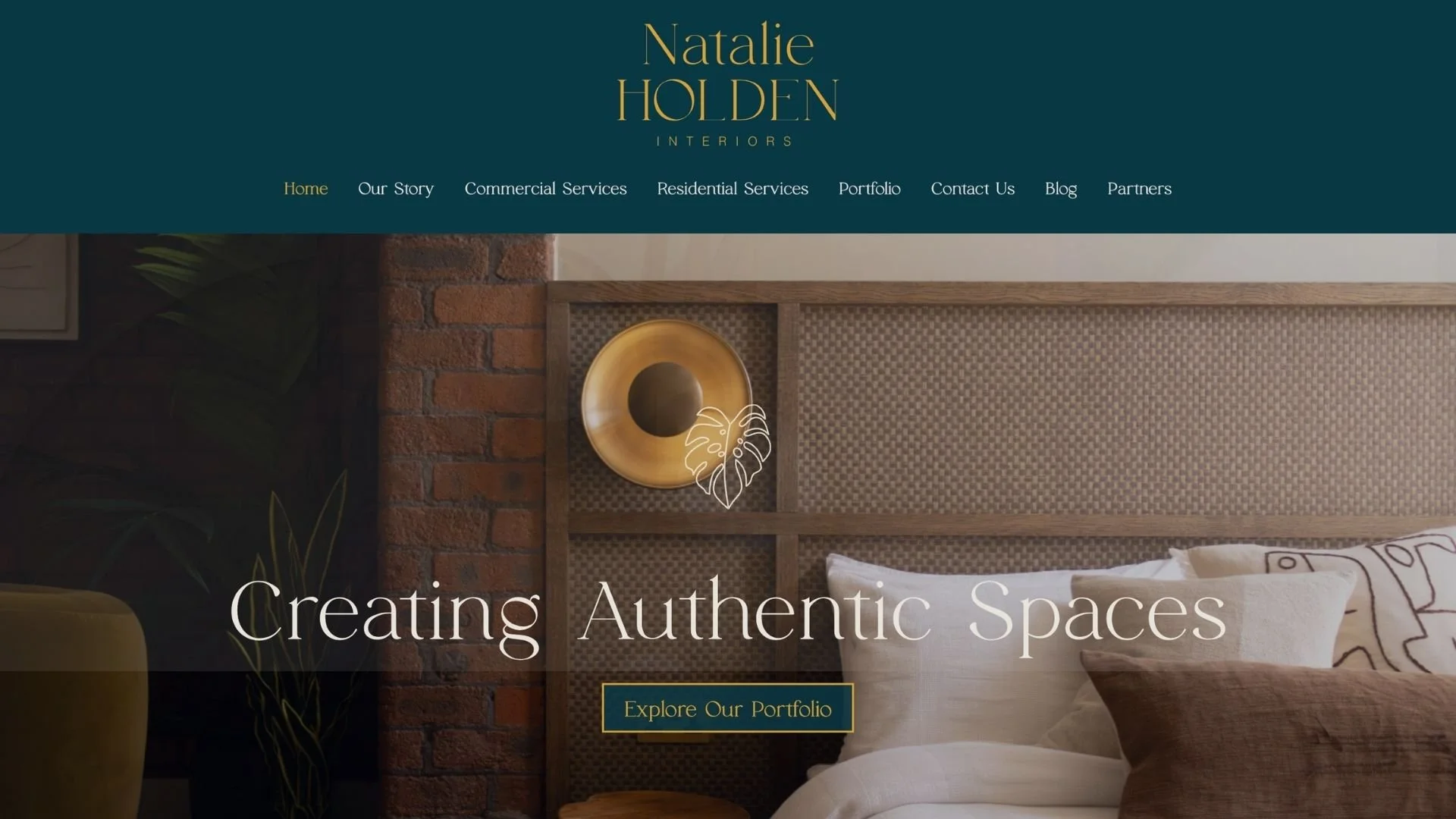
Natalie Holden Interiors is a luxury interior design studio based in Cheshire, specialising in high‑end residential and commercial projects across the North West.
The business had been built largely on referrals and word‑of‑mouth. As Natalie prepared for maternity leave in April 2025, she needed her marketing to generate enquiries without relying on active client hunting from a small team.
The challenge
In October 2024, Natalie reached out with a clear problem: the website existed, but it wasn’t pulling its weight.
Traffic was modest, search visibility was limited, and there was no structured way to attract, capture, or nurture potential clients through a longer decision‑making process.
With maternity leave approaching, the business needed a system that could work in the background.
The approach
Over 12 months, we worked across three phases to turn the website into a lead‑generating asset.
Phase 1: Audience clarity and journey mapping (months 1–3)
Before writing anything, we defined Natalie’s ideal client profile, looking at who they were, what mattered to them, and where they searched for help.
We then mapped the customer journey to understand what information was needed at each stage. From this, we created three strategic lead magnets:
A home renovation guide for early‑stage planners
A budgeting guide addressing cost concerns
An interior design style quiz for low‑pressure engagement
Each asset had its own landing page and automated email sequence, creating a way to nurture leads even when no one was actively selling.
Phase 2: Website refresh with search in mind (months 3–4)
With the funnel in place, we focused on the website itself.
Key pages were rewritten:
Homepage
Residential services
Commercial services
The copy was aligned with how people actually search for interior design support, including location‑based intent across Cheshire, Liverpool, and Manchester.
Working alongside the web designer, homepage UX was refined using heatmap data to reduce drop‑off points and guide visitors more clearly towards enquiry.
Phase 3: Long‑term content strategy (months 4–12)
Once Natalie went on maternity leave, we implemented a consistent blogging strategy: two articles per month, every month.
Each blog was written for homeowners at the very start of a renovation journey, focusing on guidance, reassurance, and demonstrating understanding of real‑world challenges.
Rather than chasing quick wins, the focus was on building visibility and authority over time. Each blog was repurposed across email and social channels to extend reach without increasing workload.
The results
After 12 months, the impact was clear.
Organic traffic doubled year‑on‑year, with a steady upward trend and no major dips — a strong indicator that the content was evergreen and technically sound.
Search visibility improved significantly, with strong page‑one and top‑three positions across key regional terms, including competitive location‑based searches.
The commercial‑intent shift
Early traffic leaned towards informational searches. Twelve months later, 72.3% of site traffic came from commercial‑intent queries.
These were homeowners actively planning renovation projects and looking for professional support, not casual browsers.
This shift reflected a deliberate move towards content that supported buying decisions, positioning Natalie Holden Interiors as a trusted authority at the point where expertise matters most.
Value beyond the metrics
Some outcomes don’t show up neatly in analytics:
Increased brand familiarity before first contact
Stronger trust built through education rather than sales copy
Ongoing presence throughout longer decision‑making cycles
Authority built through answering questions, not chasing enquiries
Why this worked
Clear understanding of the audience and their decision‑making journey
Consistent execution over time
Repurposing content across channels for maximum leverage
Translating expertise clearly, without needing prior industry experience
What this shows
Consistent, audience‑focused blogging builds trust, authority, and commercial visibility when given time to compound.
This approach is replicable across service‑based businesses where buying decisions take time and credibility matters.
Looking for similar support?
I work with businesses on long‑term content writing retainers to create blogs, case studies, and website copy that support visibility and enquiry generation.
If you’re ready to stop relying on referrals alone and build a content plan that actively works for your business, get in touch to see how a content writing retainer could work for you.